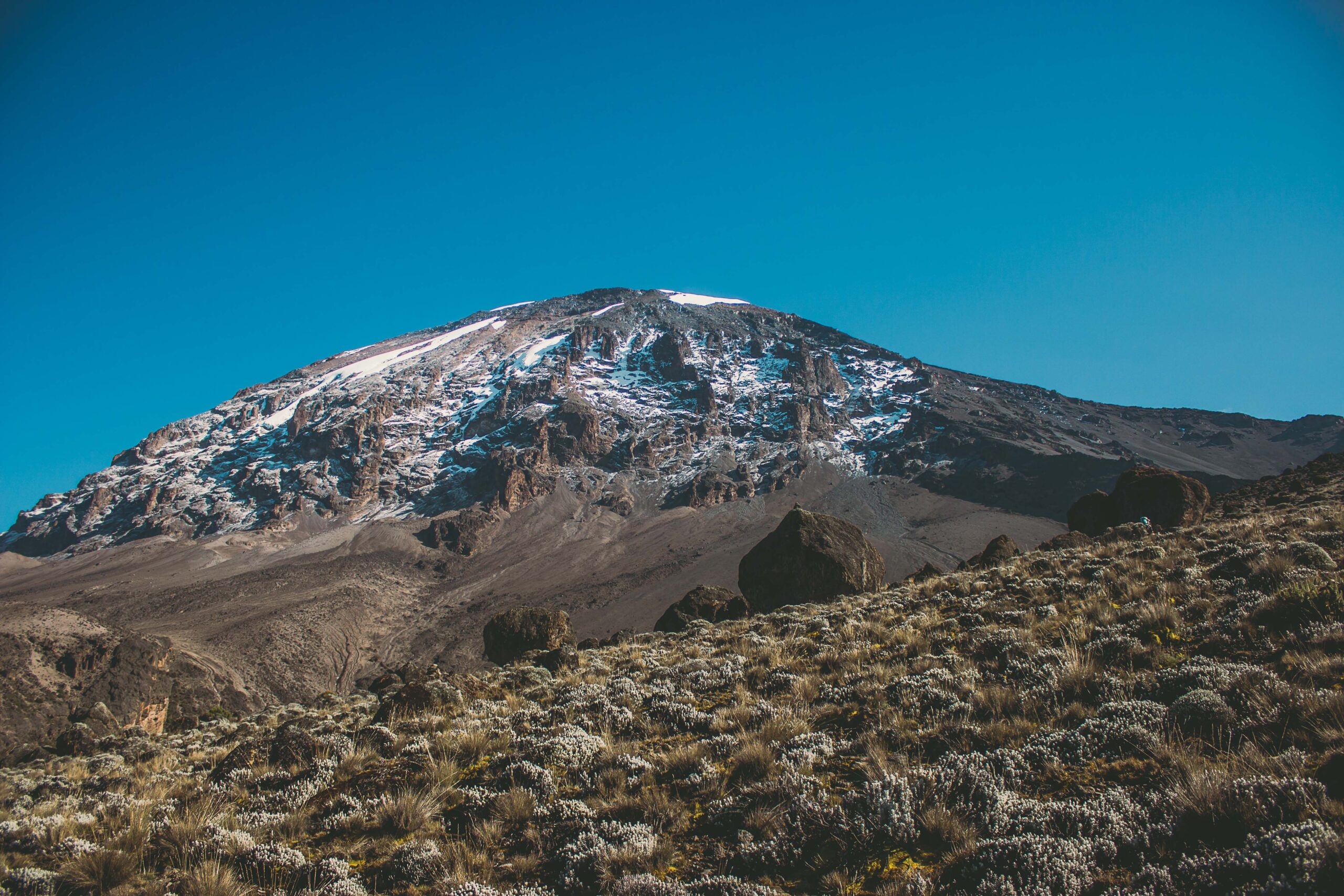
Begin near the Kenyan border on a quieter northern trail. The route passes through high-altitude moorland toward Mawenzi, summits from Kibo and descends on the Marangu side.
Plan this climb ↗Begin near the Kenyan border on a quieter northern trail. The route passes through high-altitude moorland toward Mawenzi, summits from Kibo and descends on the Marangu side.
All route schedules are examples for discussion. Your guide sets the daily pace and can adjust the plan to mountain and weather conditions. A summit attempt depends on how you feel and current conditions.
An example itinerary to help you picture the climb. Your guide sets the daily pace and can adjust the plan to mountain conditions.
Register at the northern gate and climb gradually through farmland and montane forest.
Begin beneath the forest canopy, where the trail is often humid and shaded. Your guide sets a steady pace with regular water breaks while the team checks that everyone is comfortable with the altitude and the terrain. The forest gradually opens as the route gains height.
Continue across open moorland toward the distinctive spires of Mawenzi.
The landscape becomes more open, with giant heathers, volcanic rock and wide views when the weather is clear. Walk slowly and consistently, drink water throughout the day and let the guide manage the pace. Camp or hut arrangements follow the route plan.
Climb into the alpine zone and arrive at the sheltered camp beneath Mawenzi.
The trail reaches the high alpine zone beneath Mawenzi's rugged peaks. This is a striking environment with thin air and exposed terrain, so the group keeps a conservative pace and follows the guide's advice on hydration, rest and acclimatisation.
Take a short acclimatisation walk around camp and allow time to rest at altitude.
The trail reaches the high alpine zone beneath Mawenzi's rugged peaks. This is a striking environment with thin air and exposed terrain, so the group keeps a conservative pace and follows the guide's advice on hydration, rest and acclimatisation.
Traverse toward Kibo Hut for dinner, rest and preparation for the night start.
Reach the high camp, settle in and prepare clothing, headlamp, water and summit-day essentials. Rest as much as possible and follow the guide's briefing about the expected start, pace and cold conditions. The summit attempt depends on weather, health and the guide's safety assessment.
With your guide, begin the pre-dawn climb to Uhuru Peak and descend to Horombo Hut.
The summit push begins in the coldest part of the day and proceeds slowly, with frequent checks of each trekker's condition. The goal is to reach the planned summit point only if the guide considers conditions and health safe. After time for photographs and a short rest, descend to the lower camp. Summit success is never guaranteed; safety comes first.
Descend through moorland and forest to the Marangu exit and complete park sign-out.
Begin beneath the forest canopy, where the trail is often humid and shaded. Your guide sets a steady pace with regular water breaks while the team checks that everyone is comfortable with the altitude and the terrain. The forest gradually opens as the route gains height.
Share your preferred dates, group size and experience. We’ll start a useful conversation about the route and preparation.
Request a climb itinerary ↗